Singapore Science Park is the leading science and technology innovation park in Southeast Asia, gathering hundreds of technology enterprises, research and development laboratories and high-end talents. The requirements for spatial operation efficiency, the accuracy of human flow scheduling, and the real-time nature of data decision-making in the park are far higher than those in general commercial scenarios. Recently, the Wanfu Passenger Flow Public Cloud Platform was officially delivered and put into use in this park, marking the first large-scale application of our AI passenger flow data analysis capabilities in overseas markets.
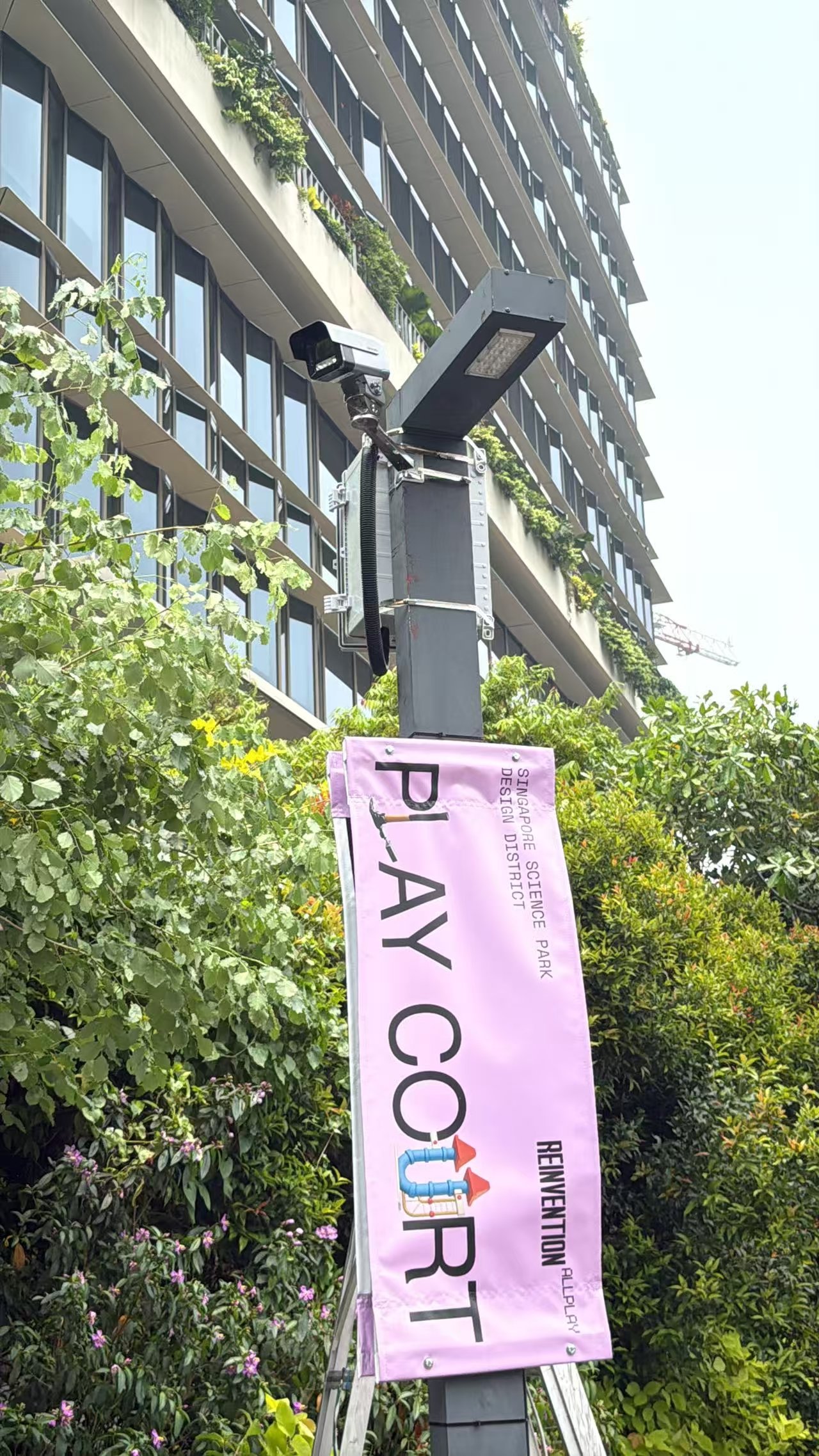
Why choose Singapore Science Park
The expansion path of overseas markets is often determined by the trust level of benchmark customers. During the selection process, the operator of Singapore Science Park focused on three dimensions: equipment compatibility, depth of data analysis and deployment flexibility.
The access of existing equipment is the primary threshold. The existing monitoring systems in the park come from multiple brands. The cost of replacing all the hardware and the risk of downtime are unacceptable. Our platform supports multi-protocol access via HTTP API and SDK. Existing devices from mainstream brands such as Hikvision, Dahua, Uniview, and Huawei can be directly connected without the need for repeated investment. This feature was verified during the delivery process - the on-site equipment adaptation cycle was controlled within the expected range, and no rework due to protocol incompatibility occurred.
The depth of data analysis determines whether the platform can be upgraded from a "counting tool" to an "operation decision-making system". The management team of the science park needs not only the number of people entering and leaving, but also multi-dimensional indicators such as time period distribution, regional heat, and circulation efficiency, to guide the optimization of spatial planning and service facilities.
The implementation of the core capabilities of the platform in the park scenario
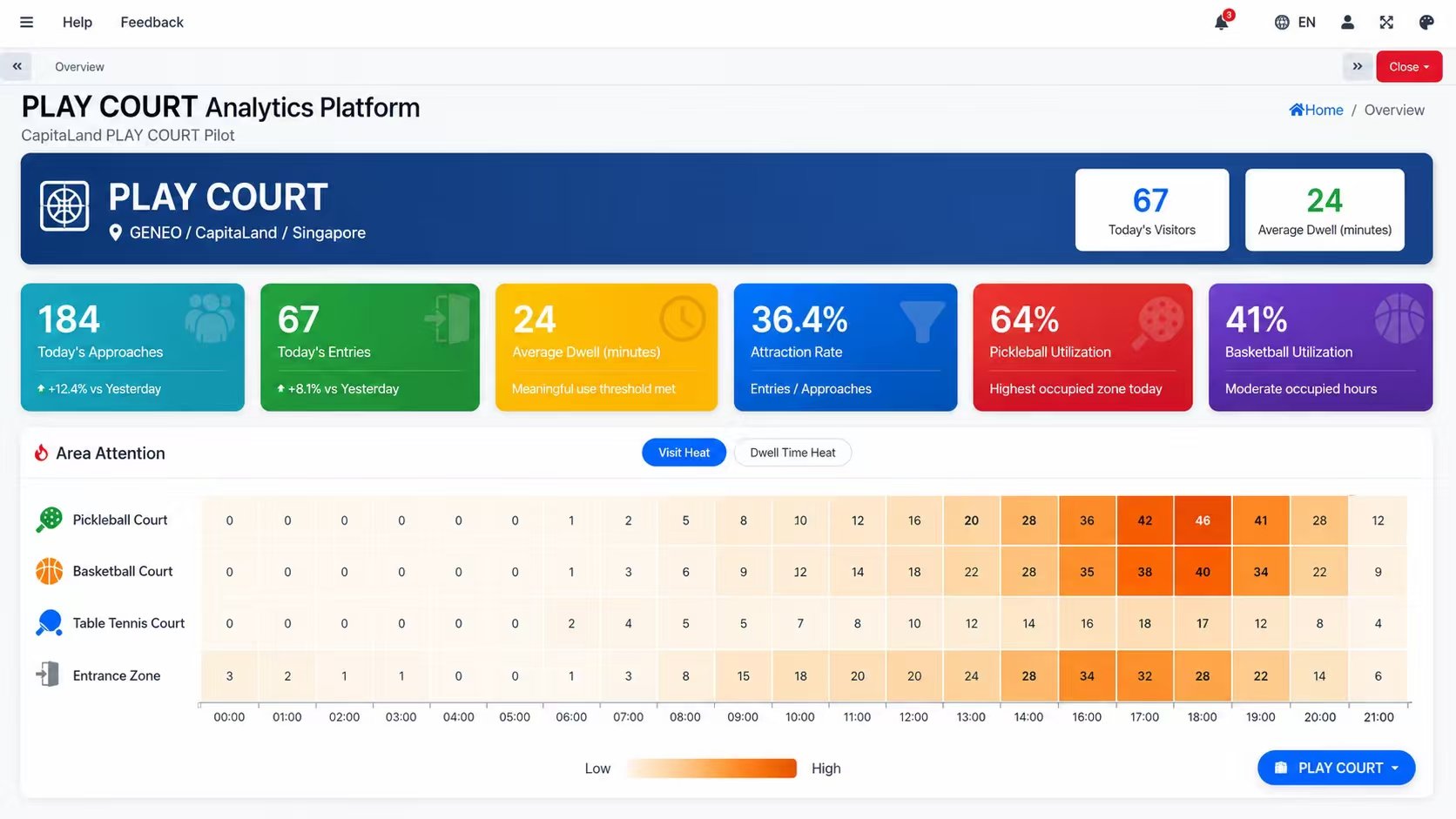
This delivery covers four core capabilities: precise passenger flow statistics, intelligent data analysis, scenario-based operation monitoring, and visual data dashboards, forming a complete closed loop from data collection to decision output.
The precise passenger flow statistics module conducts real-time counting of the flow of people at each entrance and exit, public areas, and key buildings in the park. Data is collected at the minute-level granularity, supporting time period comparison and trend analysis, helping operators identify peak hours and inefficient areas.
The data intelligence analysis layer, on the basis of the original count, superimposes derivative indicators such as in-store rate, conversion rate, and dwell time. Operation personnel can obtain real-time reports through natural language queries, such as "The distribution of passenger flow in each building last Wednesday afternoon" or "the trend of passenger flow changes this month compared to last month", without relying on technicians to write query statements.
Scenario-based operation monitoring is designed to meet the specific management needs of the park. When the density of people in a certain area exceeds the preset threshold, the system will automatically trigger a warning and link up with the broadcasting or diversion plan. This mechanism is particularly crucial during large-scale events and exhibitions, as it can transform post-event response into pre-event intervention.
The visual data dashboard presents the above indicators in intuitive charts and supports multi-terminal access. Managers can view the real-time operation status of the park on the web page, APP or mini-program, and the data refresh delay is controlled within seconds.
Engineering practice of overseas delivery
Overseas delivery and domestic projects have significant differences. Network environment, data compliance requirements, time zone coordination and localization support - each of these aspects needs to be considered in advance during the solution design stage.
Data transmission uses an HTTPS encrypted channel, and API Key authentication ensures interface security. In terms of privacy compliance, the platform outputs anonymized feature vectors and counting results, and does not retain facial images that can identify individuals. This design principle is in line with the requirements of Singapore's Personal Data Protection Act (PDPA), laying a compliance foundation for subsequent expansion into more overseas markets.
The deployment architecture adopts the SaaS model, with annual and park subscriptions, avoiding one-time heavy asset investment. This model lowers the decision-making threshold for overseas clients and also enables us to flexibly adjust resource allocation based on the scale of our clients.
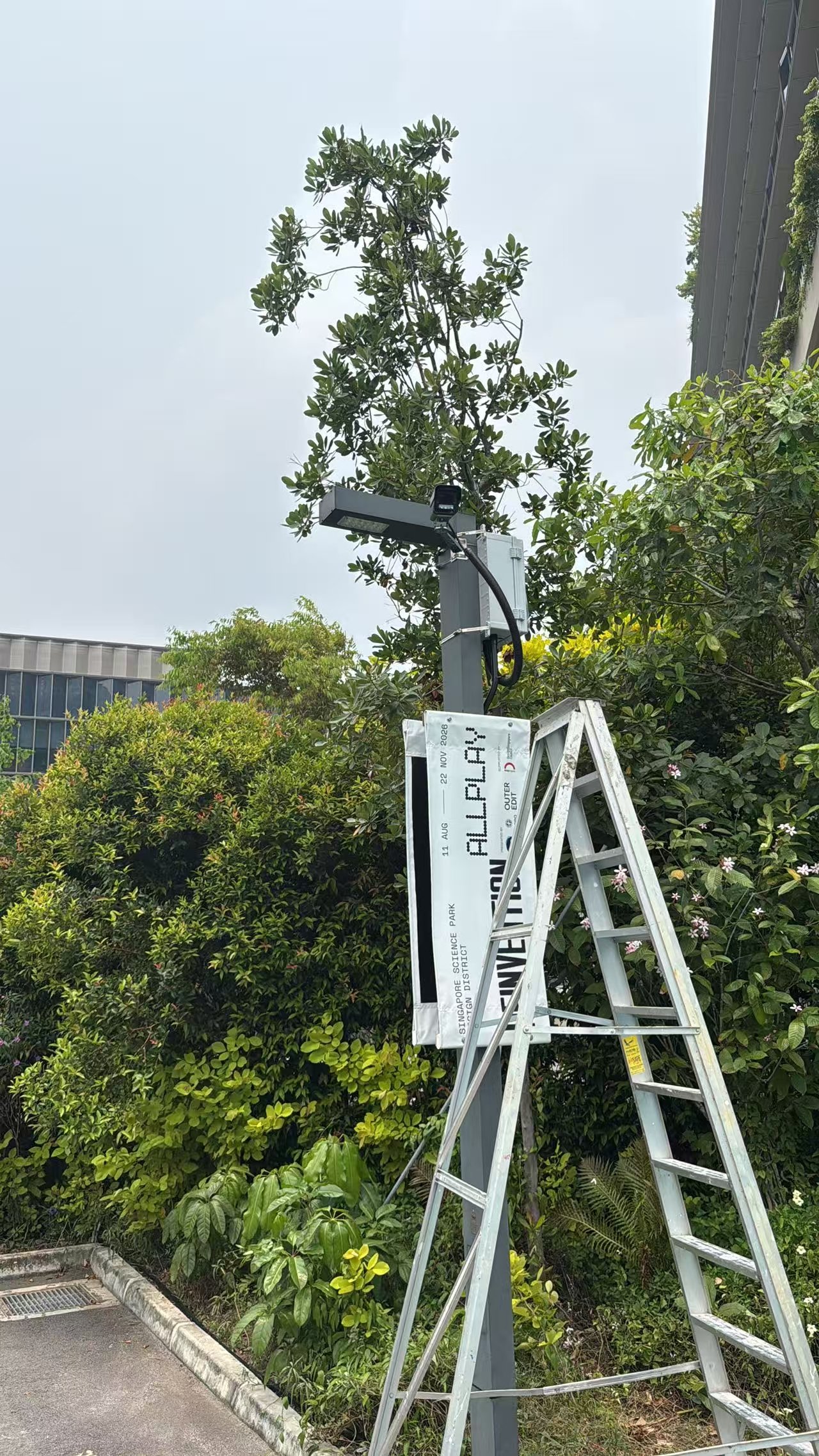
From single-point delivery to in-depth regional development
The delivery of Singapore Science Park is a starting point, not an end. The construction of smart parks in Southeast Asia is in an accelerated period, and the policy support for digital transformation by governments of various countries is continuously increasing. The equipment adaptation experience, multi-language interface solutions and compliance framework we have accumulated in this project can be directly reused in the subsequent regional expansion.
Next, we will continue to refine the smart park solution and keep making investments in three directions: data model accuracy, early warning response speed, and multi-language support. The goal is to extend the platform's overseas service capabilities from Singapore to the core park markets of Malaysia, Thailand and Indonesia by 2026.
With technical capabilities as the foundation and delivery quality as the credit, the overseas expansion path of Wanfu Passenger Flow Public Cloud Platform has become clear.